
Course Info
Updates, Advances and Practical Information You Can Use Now To Screen, Diagnose and Manage Patients With Kidney Disease
With more than 50 interactive lectures and case-based sessions, this program provides a comprehensive update of the most important changes now impacting Nephrology with guidance on how to incorporate these changes into your clinical practice to optimize patient care and improve outcomes.
Many practicing nephrologists and physicians find it difficult to keep up with the rapid scientific and technological advances in renal care because medicine is changing at a faster pace than ever before. This live-streaming and fast-paced educational offering is taught by world-renowned experts and Harvard Medical School’s leading clinical faculty. The most important updates and advances in the diagnosis and treatment of kidney diseases will be taught, including practical information that you can use now to provide exceptional patient care.
We will address pathophysiologic and clinical issues in the major areas of nephrology, including:
- Glomerular disease
- Acute renal failure
- Kidney transplantation
- Xenotransplantation
- Immunosuppressive management
- Hypertension
- Pregnancy and renal disease
- Onco-nephrology
- Acid-base and fluid and electrolyte disorders
- Potassium balance
- Climate change and kidney disease
- Primary hyperaldosteronism
- Bone mineral disorders
- Lupus nephritis
- Diuretic resistance
- Dialysis
- Kidney stones
- Polycystic kidney disease
- Genetic renal diseases
- Cardiorenal and hepatorenal syndrome
Presenters will also discuss diagnostic testing, well-recognized medical complications, evidence-based treatment plans and provide specific management strategies and recommendations to optimize care.
Designed by and for Clinicians
The curriculum focuses on state-of-the-art approaches to the challenges we face and the best ways to apply these approaches to our practice to provide exceptional patient care.
Highlights of this program include:
- New Medications: Practical applications of the latest treatments for diabetes mellitus, proteinuria and obesity in the context of CKD.
- Hypertension Management: The latest strategies for controlling hypertension, focusing on the role of aldosterone excess.
- Renal Diseases: Advanced insights into the pathogenesis, diagnosis and management of IgA nephropathy, membranous nephropathy, minimal change disease and FSGS.
- Genetic Testing: Up-to-date guidance on genetic testing and its importance in the CKD clinic.
- Kidney Transplantation: A comprehensive overview of kidney transplantation, addressing infections, malignancies and common complications.
- Immunosuppressive Therapies: Crucial updates on immunosuppressive treatments for kidney transplant recipients, including novel therapies.
- Dialysis Management: Best practices for managing dialysis access and peritoneal dialysis, including handling complications.
- Electrolyte and Acid-Base Disorders: State-of-the-art sessions on the physiology of electrolyte and acid-base disorders.
- Onco-Nephrology: In-depth exploration of this emerging field and its clinical implications.
This is an excellent opportunity to learn the latest “best practices” and enhance your clinical skills. Both new and returning attendees will benefit from the comprehensive curriculum.
Learning Objectives
At the end of this course, you will be able to:
- Discuss how to approach patients with acid-base and electrolyte disturbances and manage their care
- Define hypertension treatment goals and management for different populations
- Review strategies for diagnosing and managing acute kidney injury
- Assess new developments to reduce the risk of chronic kidney disease progression
- Incorporate optimal immunosuppression strategies for initial and maintenance immunosuppression
- Develop strategies to screen, prevent and treat patients with long-term complications of kidney transplantation
- Summarize optimal management strategies for non-immunologic complications after kidney transplantation
- Evaluate and treat patients presenting with signs and symptoms of glomerular disease
- Explain the role of genetic testing in specific conditions
- acid-base disorders
- acute renal failure
- cardiorenal
- dialysis
- diuretic resistance
- electrolyte disorders
- glomerular disease
- hepatorenal
- hyperaldosteronism
- hypertension
- immunosuppressive therapies
- kidney stones
- kidney transplantation
- lupus nephritis
- onco-nephrology
- polycystic kidney disease
- potassium balance
- pregnancy and renal disease
- renal diseases
- xenotransplantion
Optimized for Remote Learning
What makes this course among the highest-rated Harvard Medical School CME courses:
- Enhanced for distance learning
- Submit questions through the course's online chat; Speakers will either address questions immediately from the podium or reply in the chat
- Participate in online polling feature: Year after year, participants report that the polling feature of this program has advanced their ability to approach complex and challenging cases in their day-to-day practice
- Interactive case-based questions in most presentations
- Session recordings & downloads available for immediate viewing online until June 20, 2026.
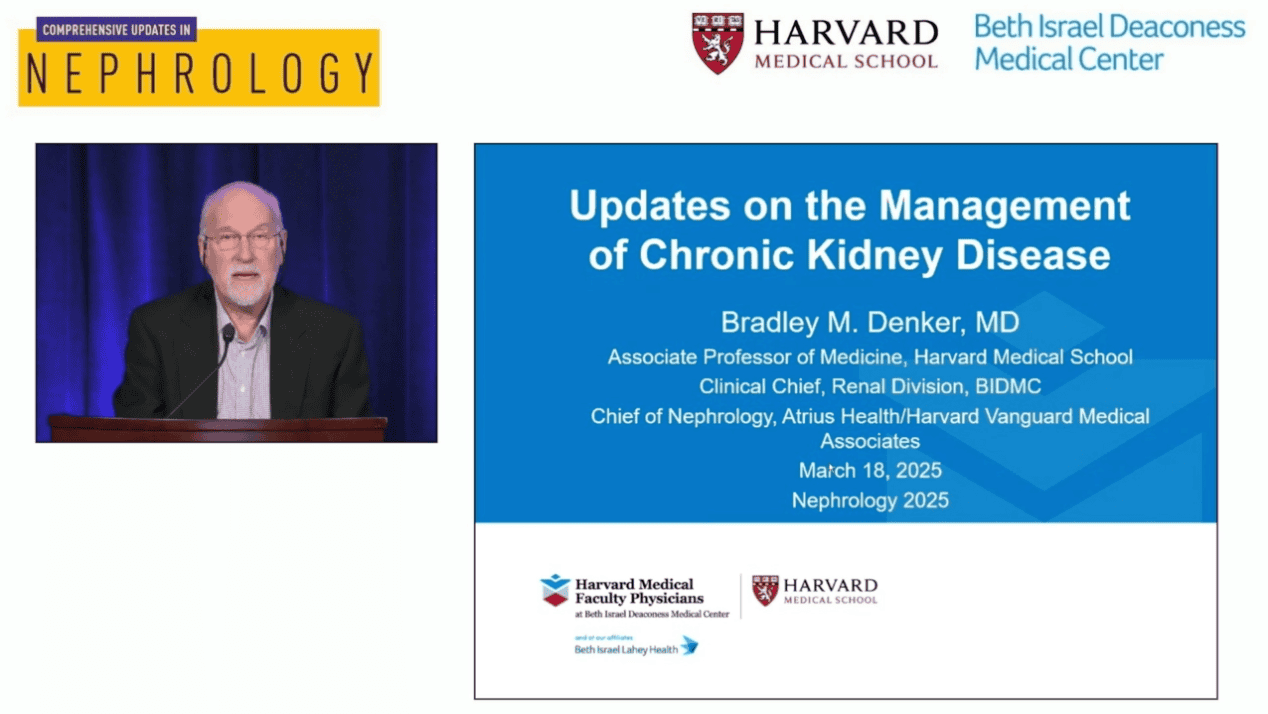
Reviews of Our Online Format
“I appreciated attending this meeting from the comfort of my own home. I was able to learn and update my practice while still keeping up with family and work obligations.”
“Great speakers, inspiring, smart, and enthusiastic.”
“The virtual option provided an opportunity for me to learn from Harvard Medical School’s best.”
“The instant response to Q&A was impressive and felt like we were connecting in-person.”
“The online platform was excellent and very easy to use.”